

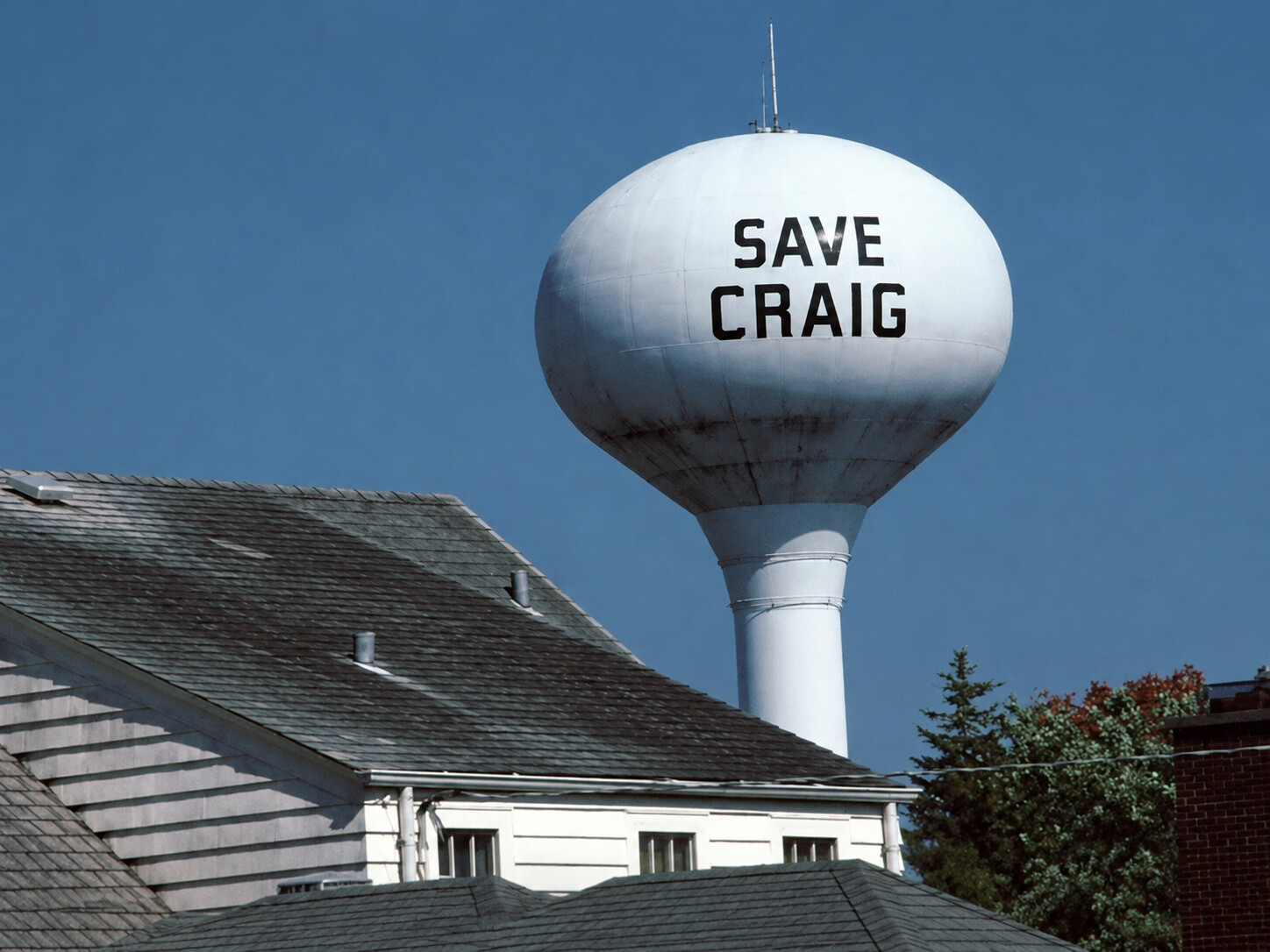
The Marlins can change how they deliver baseball. That doesn’t mean they should forget the people who gave fans a reason to watch.
Craig Minervini is out after 25 consecutive years on Marlins television, with Craig Mish reportedly taking over the hosting duties. Reporting about the decision has pointed to social-media reach and the ability to help sell broadcast subscriptions as factors in the organization’s thinking. [1]
I understand the explanation. I don’t have to agree with it.
Let me be clear about where I’m coming from. I’m not writing this to tear down Marlins ownership, attack the people still working on the broadcasts or root against whoever comes next. I’m no longer associated with those broadcasts, and I’m not speaking for anyone who is.
My voice is just one voice—from somebody who spent 12 years working behind the scenes, trying to tell great stories about Marlins baseball.
I loved doing that work.
And I believe the Marlins are going to regret moving on from Craig Minervini.
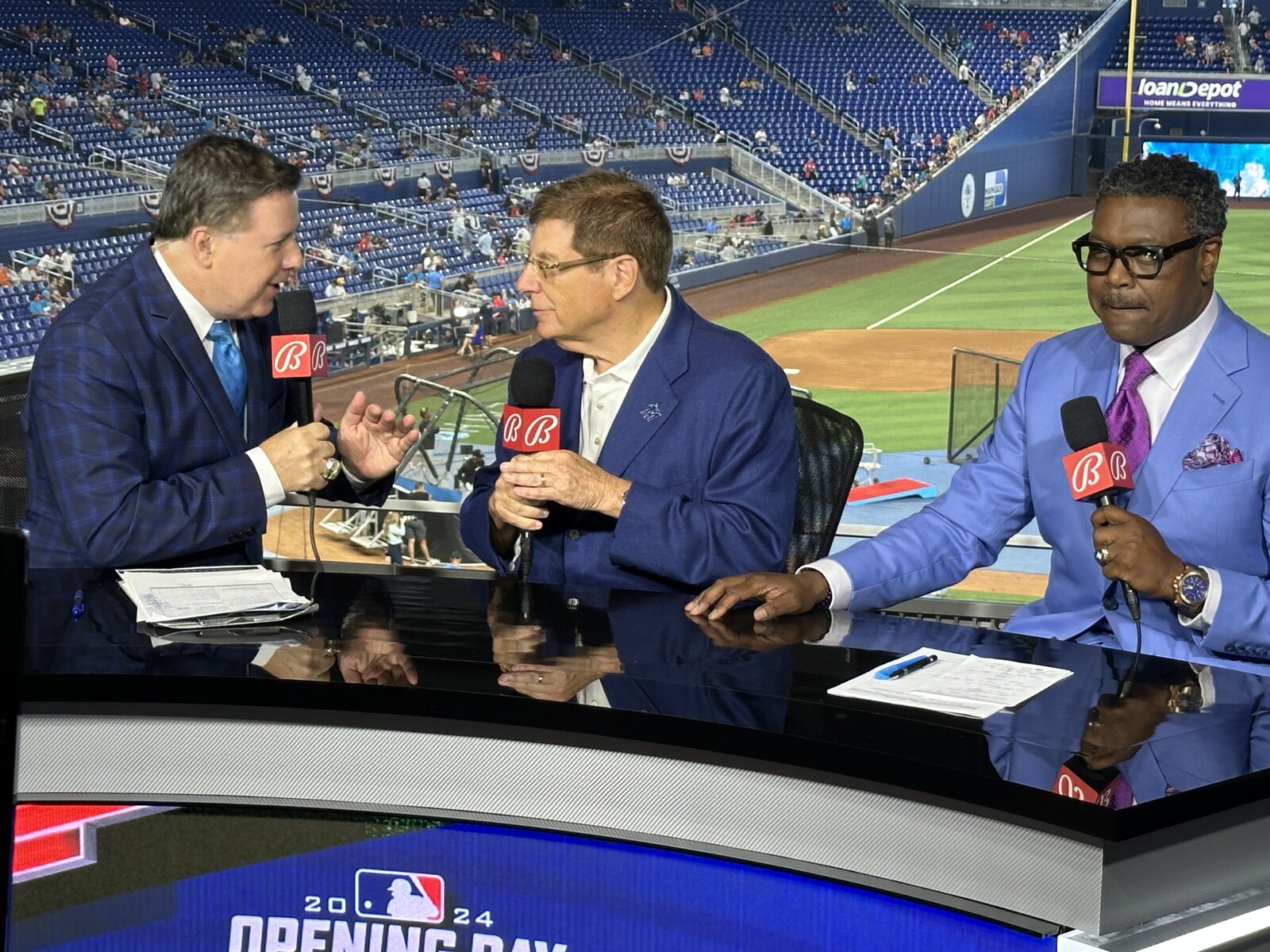
I helped serve the Kool-Aid
During my 12 years covering the Marlins, I won three Emmys. I created new shows, produced features and worked tirelessly to help fans connect with the organization. I’m proud of that work, and I’m proud of the people I did it with.
Some of my favorite people associated with the Marlins are behind the scenes. You might not recognize their names or stop them on the concourse, but their work helped make those broadcasts possible.
We understood the assignment. We were helping promote Marlins baseball. We received feedback on features. Every spring brought another set of stories, another group of players and another reason to believe things might be different this year.
Yes, we were serving the Marlins Kool-Aid.
I helped serve it—and, to some degree, drank it myself.
Because when you get to know the people, you find yourself rooting for more than the uniform.
I’ve sat in living rooms with Christian Yelich’s and J.T. Realmuto’s moms, getting to the foundation of how their sons became winners. Those conversations helped us tell fans something they couldn’t get from a box score: who these guys were, where they came from and the people who helped them get there.
And Jeff Conine’s story? That should be a movie—the kind of story Disney would love to make. I still think our Conine documentary was an Emmy we never submitted for.
Yeli and Conine are two of my favorite athletes, right there with Dwyane Wade, Shaq and Barkov. With Yeli and Conine, their humility is a big part of why. Their accomplishments made them interesting subjects. The people they were made telling their stories a privilege.
Those stories didn’t tell themselves. There were interviews to arrange, questions to ask, footage to gather and hours of work to turn it all into something worth watching.
Craig understood that process. He was a journalist and a storyteller who understood the value of those relationships and knew how to help bring those stories to the audience.
We weren’t just giving fans something to watch. We were giving them people to care about. Craig helped make that connection—and, over time, he became part of it himself.
To put it in Ohio terms
For my friends in Ohio, imagine dismissing what Dave Maetzold brings to Blue Jackets coverage because somebody else has more followers. I remember Dave at NBC4 when the franchise was taking shape; his years at the station included that period. [2]
I have my own connection to those early chapters.
In 1998, while working for WBNS-10TV, Jay Crawford and I were sent to Vancouver for exclusive coverage of the closed-door meetings during NHL All-Star weekend.
We were on the other side of the door—not in the room. We weren’t participating in the meetings. We were there to cover and document the story as it unfolded.
That’s why this history means something to me. I remember the work that went into bringing those stories home to the people of Columbus.
Or think about Dom Tiberi and Buckeye football. The man has spent 45 years at WBNS-10TV telling this community’s sports stories. [3] Imagine evaluating what he brings to an audience and deciding the most important question is whether somebody else can generate more clicks.
These guys are walking encyclopedias. They don’t just know what happened. They remember the conversations, the personalities and what those moments meant to the people watching.
They don’t need AI to explain the history they helped document. And they don’t need a follower count to prove their relationships with an audience are real.
Of course they should adapt and embrace new ways of reaching people. But their knowledge and credibility should be something you build on—not something you discount.
That makes them ambassadors for their broadcasts. Not because they’re cheerleaders, but because viewers know them, trust them and recognize that they have put in the work.
You can hire someone to occupy a chair. You cannot hand that person decades of trust along with the microphone.
That is how I see Craig Minervini.
A following is not the same thing as a relationship
Craig joined the Fox Sports Net Marlins telecasts in 2002, hosting the pregame show and Marlins Weekly and working as an in-game reporter. [4] But a start date doesn’t tell you what those years meant.
Walk the concourse with him. Walk around South Florida with him. Listen to the people who stop him to talk about a game, a player or something they remember watching when they were kids.
That is a connection with an audience.
For those fans, Craig isn’t just the person introducing the next segment. He is part of their experience of being a Marlins fan.
How much is that worth?
I don’t have a formula. But not having a formula doesn’t make the value disappear.
A social-media following has value. Promoting subscriptions has value. So does having someone on the broadcast whom people know, trust and enjoy spending time with.
Why are we treating those as competing ideas? Why not find a way to use both?
In fairness to the Fish On First podcast hosts, they praised Craig, acknowledged how difficult the decision was and questioned whether selling subscriptions should even be a broadcaster’s responsibility. They also discussed reporting that the Marlins believed Mish’s promotions had generated subscribers. Their argument was about more than simply counting followers, and that deserves to be represented accurately. [5]
But I disagree with treating the business explanation as the end of the conversation.
“Adapt” is reasonable advice. “Accept every decision because the business has changed” is something else.
And to the podcast guys making the case for clicks and followers: during my years covering the team, I never saw you on the back fields in Jupiter. Not once.
That does not mean you were never there. It means I never saw you when I was there.
You’re entitled to your perspective. I’m explaining where mine comes from.
Mine comes from gathering the interviews, finding the story and helping turn it into something worth watching. A lot of that work happens long before there is a clip to post or a link to click.
I’m not saying you need a television credential to have an opinion. I am saying there is more to evaluating a broadcaster than evaluating his account.
You can measure the reach of a post. That doesn’t mean you’ve measured the value of the person.
This doesn’t have to be Craig versus Craig
I don’t need to tear down Craig Mish to defend Craig Minervini.
My dealings with Mish were limited. One particular broadcast stayed with me, though.
We had a feature in which Sandy Alcantara discussed his health and when he expected to pitch. As I remember it, Mish’s commentary afterward contradicted what viewers had just heard from Sandy in that feature.
I wasn’t producing the live broadcast, so I wasn’t the person in position to resolve that disconnect.
In fairness to Mish, it was his first appearance on our broadcast. It was Opening Day. That is a big stage, and one appearance should not define someone’s career.
But it illustrated a distinction that matters to me: having information from an inside source and helping deliver a coherent, credible broadcast are not the same skill.
A player’s account and a reporter’s information can differ. When they do, explain the difference. Give viewers the context. Don’t leave them wondering which part of the broadcast they are supposed to believe.
That takes listening, preparation and coordination. Craig’s experience mattered in that setting.
And since we’re talking about inside sources, here’s one: Shed’s inside source says they were told Mish was the new host of Marlins baseball roughly two years ago, back in the FanDuel broadcast days.
That account doesn’t establish when a final decision was made. It does make me wonder how long this direction had been under consideration.
Still, the larger issue isn’t who heard what first. It’s how information gets evaluated.
An “inside source” isn’t automatically the final word. When information comes from ownership or team communications, it comes from people with an interest in how the organization is presented. That doesn’t make it false. It makes context and verification important.
I value reporting like Barry Jackson’s. I also value the relationships Minervini built with players—the opportunity to hear from the people living the story, not only from the people managing how it is told.
Those perspectives can complement each other. One should not automatically replace the other.
Mish can bring reporting and an audience without making Minervini’s experience expendable.
Respect the people doing the work
I wasn’t a fan of the Marlins moving on from Mel Stottlemyre Jr., either. I thought he was a savant at what he did with those pitching staffs.
He continued coaching during the 2021 season while battling prostate cancer. [6] That deepens my respect for his commitment. I don’t know everything that went into the decision to move on from him, and I’m not going to assign a motive I can’t establish.
I just know how highly I valued what he brought to the organization.
That’s where I’m coming from with Craig, too: respect for the work and for the person doing it.
Nobody deserves a job forever simply because they have been there a long time. But longevity combined with ability, credibility and a genuine connection with the audience should count for something.
And I’ll give the Marlins credit where I think they deserve it: I’m glad Gaby Sánchez is in the booth. [7]
Gaby is as real as it gets. I enjoy that authenticity. I want someone who knows the game, has a perspective and sounds like himself.
That’s a reason to watch.
So is Craig.
The strongest subscription pitch is still the baseball
I understand that Caroline O’Connor and the business side have a product to sell. I spent years helping make that product.
But the subscription pitch cannot rest primarily on the person sitting at the studio desk.
Craig Minervini doesn’t assemble the roster. He doesn’t set the payroll. He doesn’t decide which players fans get to keep watching or how long they have to wait for the plan to work.
A broadcaster can make the experience better. He cannot make the team win.
There is nothing unreasonable about asking on-air talent to help promote the broadcast. There is a difference, though, between asking someone to promote the product and expecting him to compensate for the reasons people are reluctant to buy it.
My view is that the strongest subscription pitch is still compelling baseball: players fans care about, meaningful games and a believable reason to invest their time.
I hope Peter Bendix’s plan succeeds. I want the Marlins to win. I would love to watch another championship.
But before asking whether the broadcaster is doing enough to sell the team, ask whether the team is doing enough to sell itself.
And don’t overlook the people who have already spent years giving fans a reason to stay connected.
This is about what is worth keeping
Maybe it’s the producer in me, but I look at an archive—old interviews, features and footage—and see gold.
Those stories can still mean something. They can help explain the present and introduce a new audience to the past. You don’t understand their full value by looking only at what it costs to keep them.
The same care should apply to the people who know that history.
And Craig isn’t just somebody to bring back for an anniversary clip. In my view, he still has something valuable to contribute right now.
As for Panthers hockey, I’m going to leave that one on ice. This is about Craig and Marlins baseball.
What worries me isn’t simply the end of an old television model. It’s the possibility that journalism and storytelling become secondary to selling access to the broadcast.
This isn’t television versus podcasts. Good journalism can happen on either platform. The standard is the work.
Are you listening? Are you checking? Are you providing context? Are you willing to ask a question that complicates the explanation you have been given?
A team broadcast can be enthusiastic without becoming unquestioning. It can support the players without endorsing every organizational decision. It can celebrate the present without pretending the past has nothing useful to teach us.
That perspective isn’t disloyalty. It’s part of doing the job well.
Craig brought history, relationships, humor and judgment to that job. I worked alongside him. I saw it.
So, yes: Save Craig.
Not because he needs a sympathy campaign. Because I believe his work deserves defending.
I’m still a Marlins fan. I want the team to succeed. I want the broadcasts to succeed. I want the people still doing that work to have great stories to tell.
I don’t need this decision to fail so I can say I was right.
But I do think the Marlins may discover that what looked replaceable on paper was harder to replace in practice.
My voice is only one voice. But it comes from somebody who helped make those broadcasts, cared about the work and loved doing it.
Craig Minervini’s value was never just in how many people he could persuade to click. It was also in how he helped make them care.
That deserves more consideration.
Craig deserves better.
And Craig, one last thing from the producers behind those stories:
Let’s not pretend you always made it easy on us.
We had our share of battles behind the scenes. But those battles were always about the same thing: putting on the best broadcast and telling the best story. When we pushed back, it was because we cared about getting it right, too.
I’m proud of what we created together—even on the days we made each other work a little harder for it.
Thank you for being a professional, we'll always have the great stories we told together. Good luck with your next venture.
-Shed